Black and White Farm Scenes with Windmill
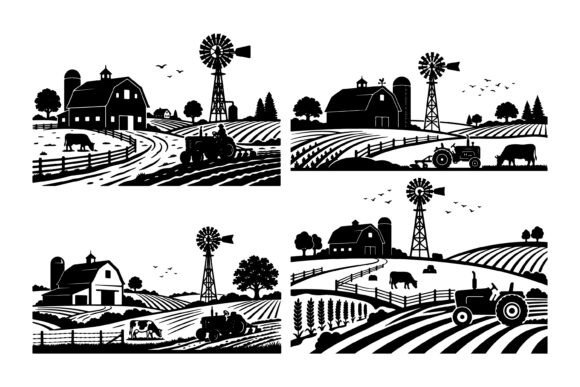
The appeal of Black and White Farm Scenes with Windmill lies in its ability to capture the essence of rural life through a minimalist, timeless aesthetic. These illustrations often feature windmills standing proudly against open fields, alongside barns, tractors, and animals, all rendered in stark black and white. This style not only highlights the simplicity and beauty of agricultural settings but also evokes a sense of nostalgia and tranquility that resonates with many viewers.
What sets Black and White Farm Scenes with Windmill apart from other visual styles is its focus on contrast and form. By eliminating color, the emphasis shifts to texture, shadow, and composition, allowing each element to stand out more clearly. This approach can be particularly effective in storytelling, where the absence of color can enhance the emotional impact of a scene without distraction.
Differences from Other Visual Styles
When compared to more colorful or detailed illustrations, Black and White Farm Scenes with Windmill offers a unique perspective. While vibrant images can convey a wide range of emotions and details, monochrome art often encourages a deeper engagement with the subject matter. The lack of color forces the viewer to focus on the structure and mood of the scene, which can be especially powerful in depictions of rural landscapes.
Another key difference is the versatility of this style. Black and white illustrations can be adapted for various purposes, from educational materials to decorative prints. This adaptability makes them a popular choice among artists, educators, and homeowners alike. However, it's important to consider the context in which these scenes will be used, as the effectiveness of the style may vary depending on the intended audience and purpose.
Strengths and Limitations
The strength of Black and White Farm Scenes with Windmill lies in its ability to evoke emotion and create a strong visual narrative. The simplicity of the style allows for a greater degree of abstraction, which can be both a benefit and a limitation. For those who appreciate minimalism, this style offers a clean and elegant representation of farm life. However, for those seeking more detailed or dynamic imagery, the lack of color may be seen as a drawback.
Additionally, the use of black and white can sometimes limit the ability to convey certain aspects of the scene, such as the time of day or specific weather conditions. While this can be intentional—creating a timeless feel—it may also restrict the viewer's ability to fully immerse themselves in the environment depicted.
Best-Fit Situations and Alternatives
Black and White Farm Scenes with Windmill is particularly well-suited for projects that prioritize mood and atmosphere over realism. It can be an excellent choice for book covers, greeting cards, or home decor, where the goal is to create a calming and nostalgic ambiance. In educational contexts, these illustrations can serve as effective tools for teaching about rural life, agriculture, or historical settings without overwhelming the viewer with excessive detail.
However, there are situations where alternative styles may be more appropriate. For instance, if the goal is to provide a more immersive or realistic experience, then colored illustrations or photographs might be better suited. Similarly, if the intent is to highlight specific features of the farm, such as the machinery or architectural elements, a more detailed and colorful approach could be more effective.
It's also worth considering the target audience when choosing between different visual styles. Adults aged 20–50, who are often evaluating options based on practicality and aesthetics, may prefer a style that balances simplicity with depth. In this regard, Black and White Farm Scenes with Windmill offers a compelling middle ground, combining visual appeal with a sense of timelessness.
Practical Comparisons and Examples
To illustrate the differences between Black and White Farm Scenes with Windmill and other styles, consider a comparison between a monochrome illustration and a detailed colored painting. The former may be more suitable for a children's book that aims to teach about farm life in a gentle, non-distracting manner. The latter, on the other hand, could be ideal for a documentary or educational resource that requires a high level of detail and realism.
Another example is the use of these illustrations in interior design. A black and white farmhouse scene might be more appropriate for a modern, minimalist living space, while a colorful depiction of a farm could work better in a rustic or traditional setting. The choice ultimately depends on the overall design theme and the message the artwork is meant to convey.
Decision Factors and Evaluation Criteria
When evaluating whether Black and White Farm Scenes with Windmill is the right choice, several factors should be considered. First, the intended use of the illustrations plays a crucial role. Are they meant for decoration, education, or storytelling? Each purpose may require a different approach to visual presentation.
Second, the target audience should be taken into account. If the audience values simplicity and clarity, then a monochrome style may be more effective. Conversely, if the audience prefers rich detail and vibrancy, then a more colorful option may be preferable.
Third, the availability of resources and budget constraints can influence the decision. Creating or sourcing high-quality black and white illustrations may require different considerations than working with colored images. Additionally, the cost of printing or reproducing the artwork may vary depending on the medium and format chosen.
Finally, the overall aesthetic and tone of the project should align with the chosen style. A cohesive visual identity is essential for any creative endeavor, and the selection of artwork should support the broader goals and themes of the project.
Conclusion and Final Thoughts
In summary, Black and White Farm Scenes with Windmill offers a distinctive and versatile approach to depicting rural farm life. Its ability to evoke emotion, simplify complex scenes, and create a timeless aesthetic makes it a valuable option for a wide range of applications. However, it is not without its limitations, and the choice of style should be guided by the specific needs and goals of the project.
Ultimately, the decision to use Black and White Farm Scenes with Windmill should be based on a careful evaluation of the intended use, audience, and desired outcome. By considering these factors, individuals can make an informed choice that best suits their needs and enhances the overall impact of their work.